
For a long time, I thought clarity was something that arrived before action. First you understand exactly what you want to do, then you make a plan, then you begin. It sounds logical, and perhaps that is why so many people wait. They wait for the right idea, the right timing, the right confidence, the right amount of money, or simply that feeling that says, “Yes, now I am completely sure.”
My own life did not work that way.
I did not begin with a clear picture of where I wanted to end up. There was no detailed roadmap connecting my early working years to travel, events, entrepreneurship, cinema or investing. Most of the time, I could only see what was immediately in front of me. So I worked with what I had, met people, travelled, tried things, made mistakes and kept adjusting. Looking back now, the direction appears much clearer than it ever felt while I was living it.
That is probably one of the most important things experience has taught me: clarity often comes after movement, not before it.
When you are standing still, your mind can create hundreds of possibilities. You imagine what may go wrong, what people may think, whether the opportunity is good enough, whether you are ready, whether there is something better waiting somewhere else. The more you think without acting, the more complicated even a simple decision can become.
Action changes the quality of the information you have.
The moment you begin, you start learning things that thinking alone could never have told you. You discover whether customers are actually interested. You realise what you are naturally good at and what drains you. You understand whether the person you wanted to work with is actually someone you can build with. You find out whether an idea works outside the presentation.
Before action, much of what we call planning is still assumption.
After action, reality enters the conversation.
Kabhi-kabhi answer sochne se nahi, karne se milta hai.
I remember my early working years this way. At that stage, I was not thinking in terms of building a personal brand, creating a large organisation or choosing the perfect industry. I was trying to earn, understand people and find my place. Selling simple products, travelling, speaking to strangers and facing rejection did not look like a carefully planned business education at the time.
But that movement was teaching me.
I was learning how people react when you approach them. I was beginning to understand trust, hesitation and negotiation. I was noticing that I enjoyed working with people and solving problems. I was seeing the importance of experiences, travel and relationships without having a neat label for any of it.
The direction was emerging because I was already on the road.
This is very different from acting without thinking. I do not believe people should take every risk simply for the sake of movement. There are decisions that require research, preparation and patience. But preparation can also become a hiding place. You keep collecting information because collecting information feels safer than making the decision.
At some point, another spreadsheet will not give you certainty.
Another conversation will not remove every risk.
Another month may not make you feel more ready.
You simply have to begin.
I see this often when I speak to people who want to start businesses. They may have spent months perfecting the name, the logo, the website and the business plan, yet they have barely spoken to a customer. My instinct is usually to bring the conversation back to the ground: sell something. Speak to people. Find out whether the problem is real. Let ten customers challenge the assumptions you have been protecting for six months.
Reality is a very efficient teacher.
It also teaches you something about yourself.
You may believe you want to build a certain kind of business until you actually spend six months doing the work. You may think you enjoy management but discover you prefer selling. You may believe you need to become an entrepreneur when what you actually want is greater independence inside your profession. These are not failures of planning. They are discoveries.
And discoveries require exposure.
One of the dangers of waiting for complete clarity is that we imagine there is a single correct path and that choosing the wrong one will permanently damage our future. Life has rarely looked that rigid to me. Most journeys are built through a series of decisions, and many of those decisions can be changed.
You start somewhere.
You learn.
You adjust.
You continue.
If something is not working, you do not have to defend it forever simply because it was your original plan. Changing direction after receiving better information is not weakness. It is intelligence.
This became increasingly important as business grew. There were many moments when the next step was not obvious. Markets were changing, opportunities appeared unexpectedly and sometimes decisions had to be made before every answer was available. In those situations, you learn the difference between recklessness and informed movement.
You gather enough information to understand the risk, make the best decision you can with what you know, and then stay alert enough to change as new information arrives.
That last part matters.
Some people are willing to move but unwilling to adjust. They become emotionally attached to the decision they made. If the market gives them new information, they resist it because changing direction feels like admitting they were wrong.
For me, movement and adjustment belong together.
There is nothing particularly courageous about driving very fast in the wrong direction.
The skill is in moving while still paying attention.
Travel offers a simple version of the same lesson. Sometimes you begin a journey knowing exactly where you want to go. Other times you arrive somewhere and discover that the place you thought would be the highlight is not nearly as interesting as the unexpected conversation, street or experience you found along the way.
That is part of what makes travel valuable.
You leave room for discovery.
I think careers and businesses need some of that room too.
We spend so much time asking young people, “What do you want to become?” as though they should already know the final answer before they have experienced enough of the world to make that decision. Maybe a better question would be, “What are you curious enough to try next?”
That feels more useful to me.
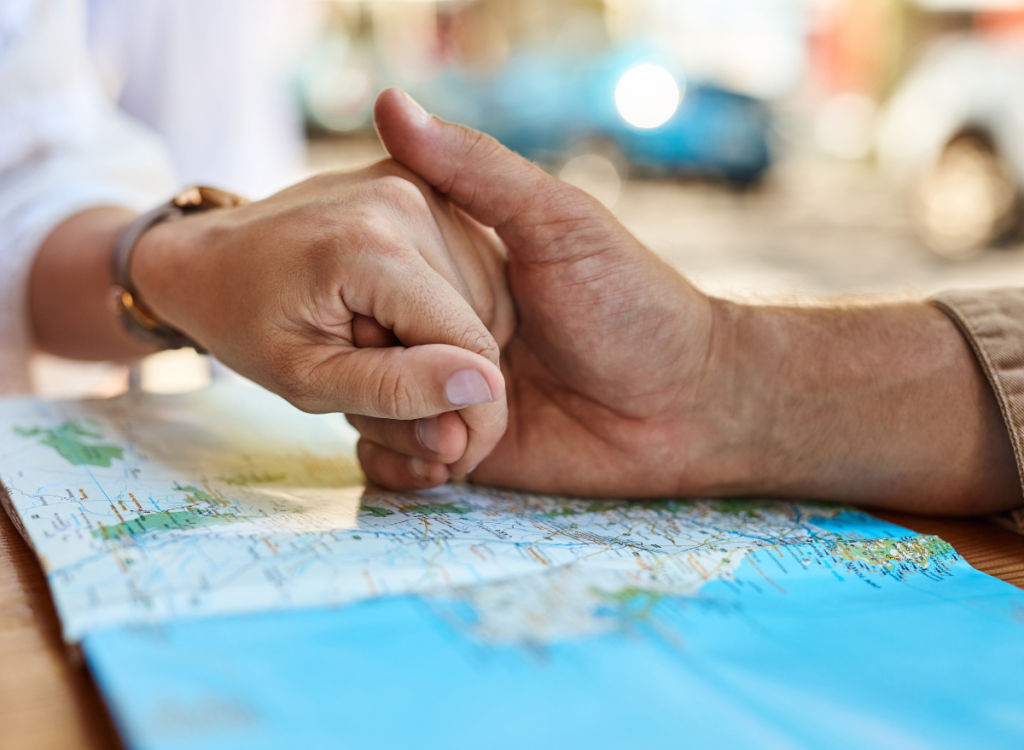
Because you do not always need the entire map.
You need enough direction to take the next meaningful step.
Then the next one.
After some time, you look behind you and realise a path has formed.
This is why I am less afraid of beginning without perfect certainty today. I know that some answers are waiting on the other side of action. I also know that the person making the decision today will not be exactly the same person making the next one. Experience changes you. Your judgement improves. Your priorities evolve.
You become more capable of seeing the road because you have travelled some of it.
So if I find myself stuck between waiting for complete clarity and taking a sensible first step, I usually prefer movement.
Not because I know exactly where it will lead.
Because I know standing still will teach me very little.
Move thoughtfully. Pay attention. Learn quickly. The direction often becomes clearer once the journey has already begun.