

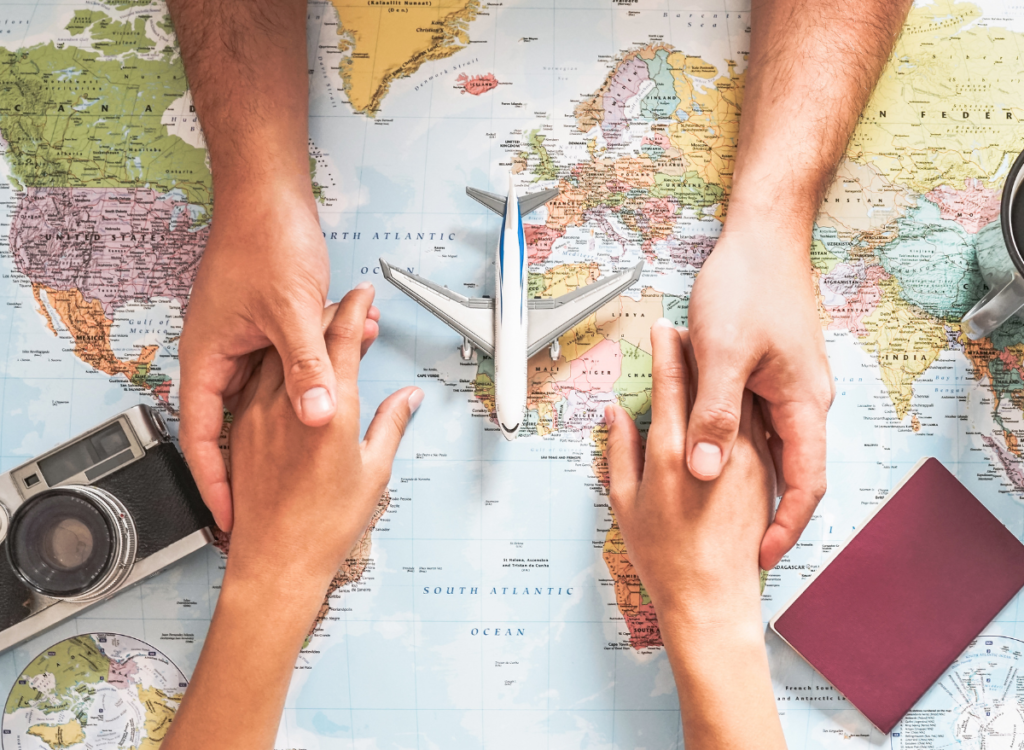
When people talk about travel, they usually begin with the destination. Paris. Dubai. Seoul. Goa. New York. Somewhere in the mountains. Somewhere by the sea. The place becomes the headline, the photograph and the reason the journey started. But when I think about the trips I remember most, the destination is only one part of the story.
What stays with me is usually something else.
A conversation. A meal. A person who helped unexpectedly. A moment when the plan changed. A street you were not supposed to take. A laugh that became part of the memory. Sometimes even a small inconvenience becomes a story you keep telling years later.
That is the strange thing about travel. We plan the destination, but we remember the experience.
I have spent a large part of my professional life around travel, events and people moving from one place to another. Because of that, I have seen the same destination create completely different memories for different people. Two guests can stay in the same hotel, visit the same places and attend the same event, yet return home with entirely different stories.
One remembers the view from the room.
Another remembers the person who welcomed them at the airport.
Someone remembers the food.
Someone remembers getting lost and discovering a place they would never have seen otherwise.
This is why I have always felt that an itinerary can organise a journey, but it cannot fully design an experience.
The experience is created in the spaces between the itinerary.
Kabhi-kabhi trip ka best moment woh hota hai jo plan mein tha hi nahi.
That has happened to me many times.
You travel for work and expect the important part of the journey to be the meeting or the event. Then years later, what you remember is an ordinary dinner after everything was over. You remember sitting with the team when everyone was exhausted but relieved. You remember somebody telling a story you had never heard before. The formal purpose of the trip slowly fades, but that human moment remains.
This is something the travel business has taught me in a very practical way.
When we organise a journey for someone, we naturally think about the visible elements first. Flight. Hotel. Transfer. Venue. Schedule. Meals. Those things have to work, and when you are managing travel professionally, there is no excuse for treating them casually.
But technically correct arrangements do not automatically create a memorable experience.
You can book the best hotel and still make a guest feel unimportant.
You can arrange a luxury car and still create anxiety because nobody communicated clearly.
You can build an extraordinary itinerary and exhaust people so completely that they never have time to enjoy it.
Good travel planning requires logistics.
Great travel experiences require empathy.
You have to imagine the journey from the traveller’s point of view.
What does the person feel when they land somewhere unfamiliar?
Do they know who is meeting them?
Are they worried about language?
Are they travelling with children or elderly parents?
Are they there for business and already thinking about the next morning’s meeting?
Is this their first international trip?
The booking may look identical in a system. The experience is not identical at all.
Once you begin seeing travel that way, even small details become important. A clear message before arrival can reduce uncertainty. Someone remembering a guest’s preference can create warmth. Giving people some breathing room in a schedule can make the entire trip more enjoyable.
These details rarely become the headline of the journey, but they shape how the journey feels.
And feeling is what memory tends to keep.
I think the same thing is true of events. People may attend a conference because of the speakers, the agenda or the business opportunity, but when they return home they often remember very different things. They remember somebody they met during a coffee break, a conversation at dinner, how smoothly the event was managed or how someone from the team helped when they had a problem.
The programme brings people into the room.
The human experience decides how they remember being there.
That understanding became especially important to me as the scale of our work increased. When you manage hundreds or thousands of people, there is a natural danger of turning experience into pure operations. You begin thinking in numbers because you have to. How many rooms? How many buses? How many meals? How many guests have arrived?
Numbers are essential for execution.
But every number represents a person.
If 3,500 people are attending an international event, operationally you are managing 3,500 guests. Personally, however, each one of those 3,500 people is experiencing one journey.
That distinction changes the way you think about service.
The person standing at the airport does not care that 3,499 other guests were handled perfectly if nobody knows where their own transfer is.
Their experience is 100% of their reality.
This is one of the reasons travel and events can be such demanding businesses. Success is created collectively, but disappointment is often experienced individually.
It keeps you humble.
It also makes you notice what genuine hospitality really means.
Hospitality, to me, is not simply luxury. Expensive does not automatically mean thoughtful. Some of the warmest experiences I have had involved very simple gestures because they felt personal and sincere.
Someone remembering your name.
A host insisting that you try something local.
A person taking five extra minutes to explain a place instead of simply giving directions.
These things cost almost nothing.
But they can completely change how you remember a destination.
Yaadein price tag se nahi banti. Yaadein feeling se banti hain.
As I have travelled more, I have also started enjoying the ordinary parts of places. Earlier, like most travellers, I wanted to see what a destination was famous for. I still enjoy that, of course. But I increasingly find myself interested in how people actually live there.
Where do they eat when they are not eating at a famous restaurant?
What does a normal morning look like?
How do people commute?
What happens in a neighbourhood that tourists rarely visit?
What do families do on a Sunday?
Those details often tell you more about a place than its most photographed landmark.
Travel becomes richer when you stop treating every destination as a checklist.
I think this is particularly important today because it is very easy to travel for the photograph. We know the famous view before we arrive because we have already seen it hundreds of times online. We know exactly where people stand for the picture. Sometimes the pressure to capture a place becomes so strong that we forget to actually experience it.
I have caught myself doing that too.
You reach somewhere beautiful and the first instinct is to take out the phone.
There is nothing wrong with photographs. I enjoy them. They preserve moments and help us share stories. But every once in a while, it is worth keeping the phone away for a few minutes and simply looking.
Some memories need to belong only to you.
Travel has also taught me that difficult moments can eventually become valuable memories. A delayed journey, unexpected weather or a plan that completely falls apart feels irritating when it is happening. Yet years later, those are often the stories everyone laughs about.
Perhaps that happens because unexpected situations reveal people differently.
You see who stays calm.
Who finds the solution.
Who complains.
Who somehow manages to make everybody laugh.
A smooth journey is wonderful, but an imperfect journey can sometimes create a stronger story.
That does not mean I would recommend deliberately missing a flight in the name of creating memories.
But I have learned not to let every disruption destroy the experience.
Plans matter.
So does the ability to let the journey become something slightly different from what you planned.
The older I get, the more I think travel is really about collecting perspectives rather than destinations. Places introduce you to people. People introduce you to stories. Stories change how you understand a place, and sometimes they change how you understand yourself.
Years later, you may forget the room number.
You may forget what time the flight departed.
You may even forget the name of a restaurant.
But you remember how someone made you feel.
You remember the evening when nobody wanted to leave the table.
You remember the stranger who helped.
You remember seeing something for the first time.
You remember laughing when the plan went completely wrong.
And eventually you realise that perhaps the destination was never the entire point of the journey.
It was simply where the experience happened.



Hi, this is a comment.
To get started with moderating, editing, and deleting comments, please visit the Comments screen in the dashboard.
Commenter avatars come from Gravatar.