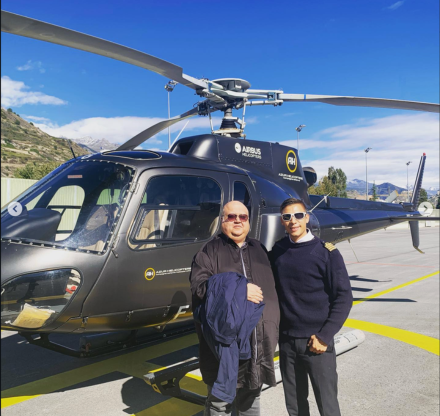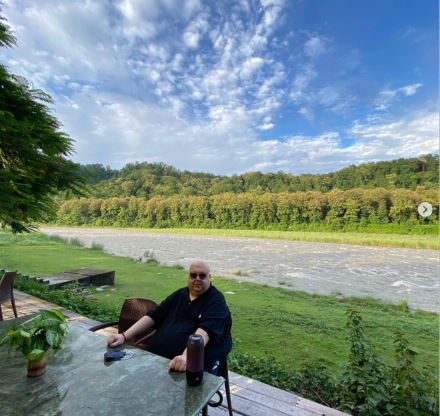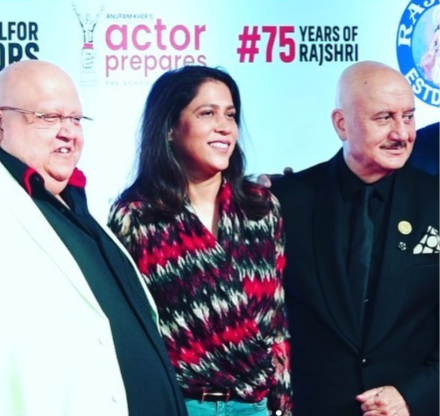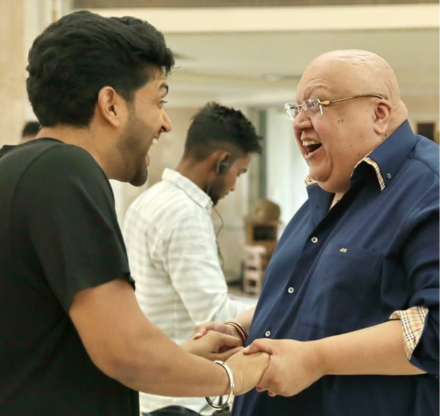
Travel entered my life as work, but somewhere along the way it became much more personal than that.
When you spend years around travel, events, conferences and people moving between cities and countries, you stop seeing a journey only in terms of tickets, hotels and itineraries. You begin noticing what travel actually does to people. It changes their mood, their perspective and sometimes even the direction of their life. A destination may be the reason someone leaves home, but very often the most memorable part of the journey is everything that happens in between.
That has always fascinated me.
Through my work, I have had the opportunity to meet people from different places, backgrounds and cultures. Every interaction teaches you something. You notice how differently people communicate, how expectations change from one market to another, how hospitality is understood in different parts of the world and how something considered normal in one culture can feel completely unfamiliar in another.
These differences are what make travel interesting.
Duniya ko sirf internet par dekhna aur us jagah khud khade hokar feel karna, dono bilkul alag cheezein hain.
You can read about a city for months, watch videos and know its most famous landmarks, but until you walk through its streets, speak to people, eat the local food and observe how everyday life actually moves, your understanding remains incomplete.
Travel gives context to knowledge.
This is something I have experienced repeatedly in business as well. When you meet someone in their own city or country, you understand them differently. You see where they come from, how they work and what matters to them. A relationship that may have begun through an email or a meeting becomes much more human when you experience the world around that person.
Perhaps that is why I have never thought of travel as only transportation.
The real value lies in the experience.
A beautifully organised journey is not remembered because every logistical detail was technically correct. People remember how they felt. Was the arrival smooth? Did somebody make them feel welcome? Was there a moment that surprised them? Did they discover something they had not expected? Did they return home with a story?
Those questions have influenced the way I have looked at travel professionally too.
When MACH began its journey in conferences, events and travel, a large part of the work was naturally about execution. Flights had to work. Hotels had to be coordinated. People had to reach the right place at the right time. Events had thousands of moving parts, and the smallest missed detail could affect the larger experience.
But if you work in this industry long enough, you realise that flawless logistics are only the beginning.
The real objective is to make everything feel effortless for the person experiencing it.
One of the international assignments that remains significant in our journey involved managing an event for 3,500 guests in South Korea. An event of that scale teaches you a great deal about planning, coordination and responsibility, but it also reminds you that behind every room number, transfer and schedule is an individual person having an experience.
That perspective matters.
When a large group travels together, it is easy for operations to turn people into numbers. Passenger 217. Room 502. Bus 8. Dinner table 14. But the guest does not experience themselves as part of a spreadsheet. For them, this may be their first visit to the country, an important professional milestone or simply a journey they have been looking forward to for months.
The industry may see volume.
The traveller experiences one personal journey.
I think good travel businesses understand that difference.
Travel has also taught me patience in a very practical way. Things will go wrong. Flights will change. Weather will interrupt plans. Someone will miss a connection. A hotel will misunderstand an instruction. No matter how carefully you prepare, there will always be variables beyond your control.
In those moments, what people remember is often not the problem itself but how you responded to it.
Travel mein plan zaroor banao, lekin plan change hone ki capacity bhi rakho.
That applies to life quite well too.
Some of my most interesting experiences have come from things that were not part of the original plan. A conversation you did not schedule, a place you discovered accidentally, a meal somebody recommended at the last moment, or a few hours spent somewhere you knew almost nothing about.
Those experiences are difficult to manufacture because their value comes from surprise.
As businesspeople, we naturally try to control outcomes. We plan, forecast and prepare. Travel reminds you that there is also value in leaving a little space for the unexpected.
I have always enjoyed that part of it.
It is also one reason I believe travel keeps you curious. You can become very comfortable inside your own environment. You know your city, your office, your routines and the people around you. Without realising it, you begin assuming that the way you experience the world is simply how the world works.
Then you travel somewhere else and that assumption disappears very quickly.
People eat at different times. Businesses operate differently. Families live differently. Cities solve problems differently. Something that seemed impossible at home may be completely ordinary somewhere else.
And sometimes you return with a question rather than an answer.
Why do they do this differently?
Could this work in our market?
Why is this experience smoother there?
What can we learn from it?
For someone who enjoys business, these questions are almost impossible to switch off. I find myself observing airports, hotels, restaurants, retail spaces, technology, customer service and even the way cities move people around. Not because every journey has to become a business study, but because curiosity tends to travel with you.
At the same time, I have learned that travel becomes much richer when you allow yourself to experience it without always trying to extract something from it.
Sometimes you do not need a business lesson.
You just need to enjoy the place.
Watch people.
Spend time with family or friends.
Sit somewhere without checking what is next on the schedule.
Those moments matter too.
Perhaps that is where my relationship with travel has changed over the years. Earlier, travel was often connected with work, events and responsibility. Today I appreciate both sides: the professional world that became such an important part of my journey and the personal experience of simply discovering somewhere new.
The two are connected, but they are not the same.
Professionally, travel taught me execution, hospitality, cultural sensitivity and the importance of details.
Personally, it taught me perspective.
It showed me that there is always another way to live, another way to think and another story beyond the one you already know.
And that is why, even after spending so many years in the travel business, I still find the idea of a journey exciting.
Not because I need to reach another destination.
Because I never know exactly what I might discover on the way.